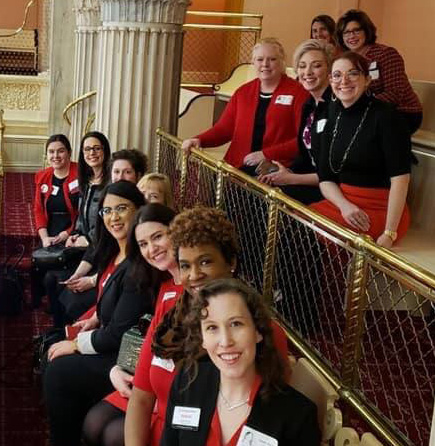
Empowering Women to Lead Since 1920
“Every one felt that our scattered efforts could accomplish more if banded together by a strong league spirit. However we may develop, our original aim was a real desire to help our city and our community.”
Junior League of Cincinnati First Meeting Report, March 17, 1920
-
1920Early Beginnings
New York City and Cleveland recommend a League be formed in Cincinnati. Mrs. Lucien Wulsin (Margaret Hager) was elected the first president of the JLC. Like many JLC leaders, Mrs. Wulsin had a family household to run and small children at home during her Presidency, demonstrating work-life balance with “an incredible ability to organize and run meetings effectively.” Her daughter, Peggy Kite, is still a Sustainer Emeritus member today.
Miss Augustus Forker (Mrs. Horace W. Reid) had spent her time at Smith College as a community organizer, and had driven in the motor corps delivering food at night from Union Station to troop trains. She was no stranger to volunteer work when elected as the League’s Second President in 1921. When asked later to recount memories of her Presidency, she emphasized that the early years of the JLC trained the “pioneer women who were to sit on boards of directors all over Cincinnati.”
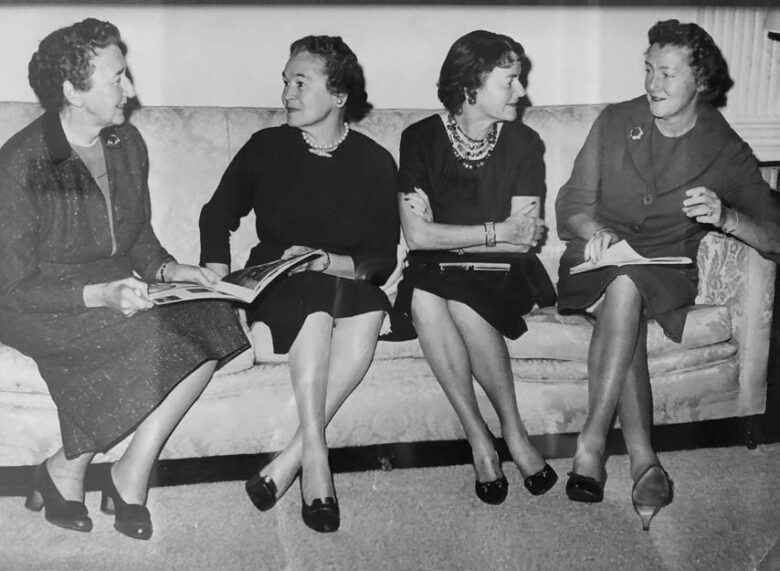
Mrs. Horace W. Reid (Miss Augusta Forker), President 1921-23; Mrs. Virginius C. Hall (Josephine Livingood), President 1927-29; Mrs. Edward C. Orr (Eleanor Simpson), President 1935-37; Mrs. David M. Forker (Elizabeth Nichols), President 1941-43 -
1930Navigating the Great Depression
1930
JLC wins first prize at the Regional AJLI Conference for our Welfare Exhibit detailing the League’s work on braille for the blind.
1931
In response to the unemployment of the Great Depression, JLC members feed 1,000-1,500 men a day at the Cincinnati Opera House on 9th and Plum. The JLC Legislative
Committee runs monthly reports on economic relief legislation, a set of policies that would eventually become the Works Progress Administration (WPA) Act.1936
In a period of financial struggle related to the Depression, the Red Cross partners with the JLC and three other women’s organizations to formally assist with raising the
necessary funds to continue their relief services.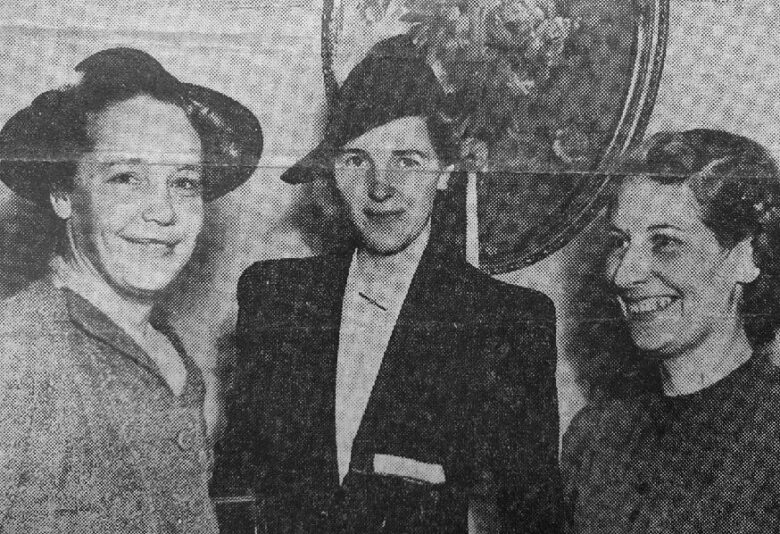
-
1940Leading through World War II
1942
As an organization, the JLC raises $28,600 in U.S. War Bonds as part of the “Women at War” Bond Program. Adjusting for inflation, this is nearly half-a-million in today’s dollars to support the war effort.
1945
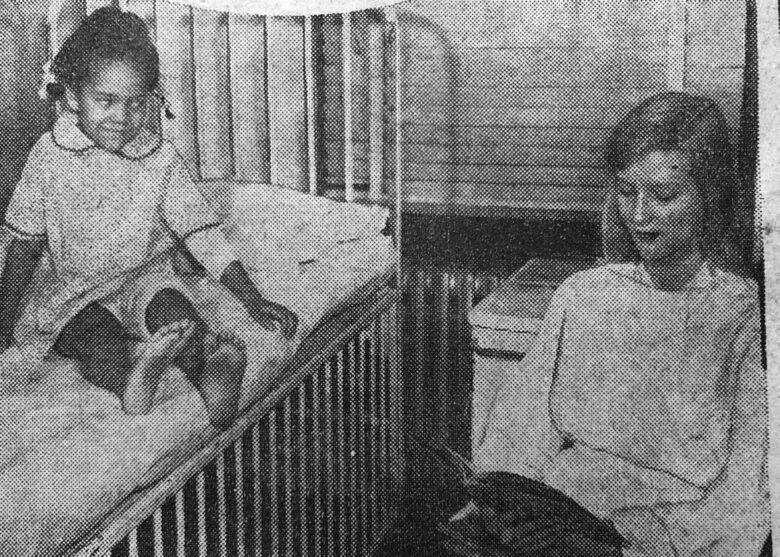
The JLC gifts the deed to its Woodward Street Clinic property to Cincinnati Board of Health, to expand services from the maternal and pre-natal services of the Babies Milk Fund to broader services for low-income families.
-
1950Defining “Women’s Work” in the Post-War Era
1953
The Speech & Hearing Center approaches the JLC for assistance with staffing their nursery school.
1957
The JLC puts the fundraising weight of its members behind the Cincinnati Scholarship Foundation with the goal of increasing college attainment for Greater Cincinnati students, regardless of financial limitations.
1958
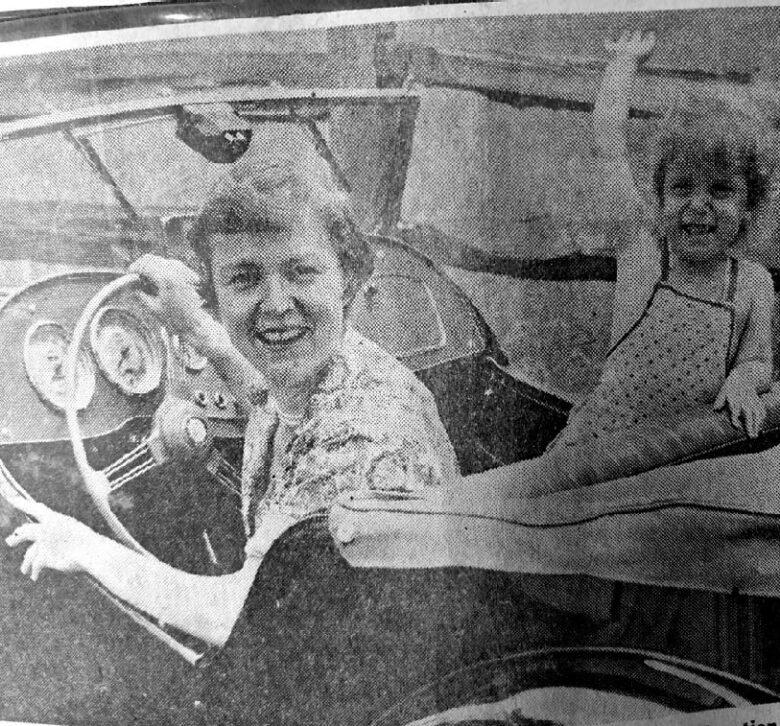
The JLC develops Careers in Social Work, a program designed to inform and encourage Cincinnatians interested in entering social services professions. Careers in Social Work remains a JLC project until it is turned over to the Community Chest in 1962.
-
1960Advancing the Spirit of the 60s through Service
1960
The Cincinnati Art Museum’s Docent Program is founded and staffed by JLC members, who would develop curriculum and materials, and lead guided educational tours throughout the 1960s.
1961
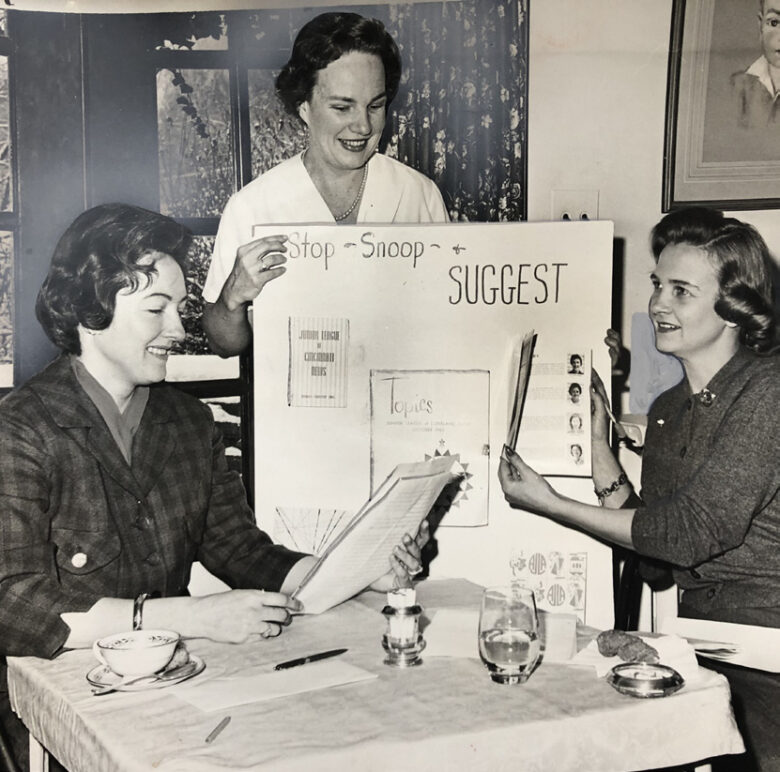
The JLC creates Cincinnati’s “Guidebook for the Handicapped” around architectural and urban planning barriers, including a detailed survey of 300 locations. This highlighted the need for infrastructure improvements 30 years before the passage of the Americans with Disabilities Act of 1990. The Guidebook would be updated again by the JLC in 1975.
1965
The JLC raises funds for a specially designed swimming pool at Camp Stepping Stones for children with multiple disabilities. The pool included a ramp for wheelchairs, handrails, and a heated apron. Stepping Stones still remains a JLC partner today.
-
1970Hustling Through the Decade
1970
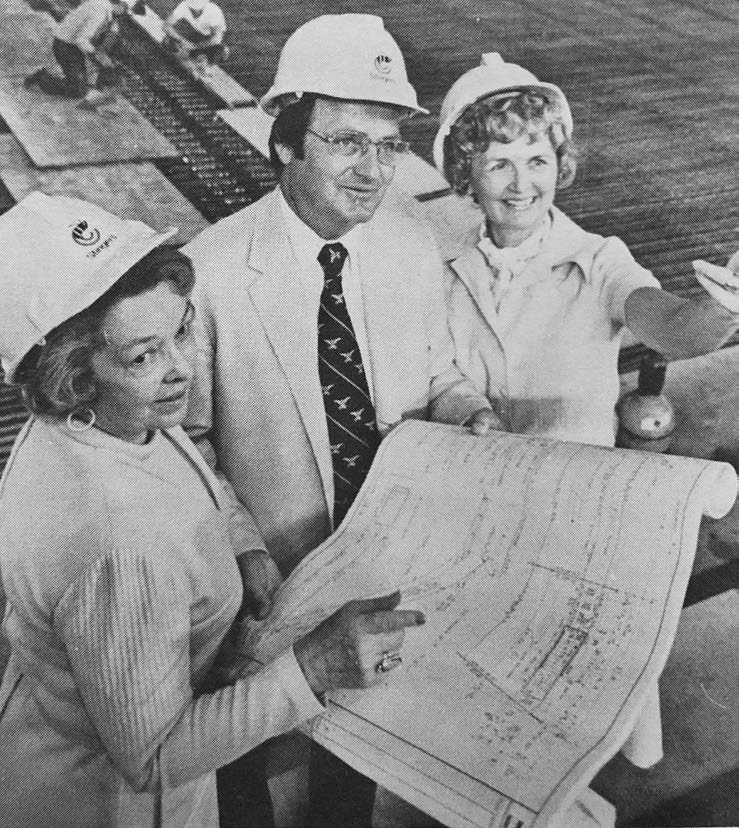
The JLC coordinates resources and activities of the University of Cincinnati, Hamilton County, the Ohio Department of Health and Education, and the City of Cincinnati to standardize training at the collegiate level for treating learning disabilities in children.
1971
The JLC founds the Appalachian Festival showcasing Appalachian artists. Proceeds from the Festival fund four programs: a Music in Schools initiative; the re-opening of the Drop Inn Center; a writing course for Appalachian heritage; and Heritage Room, where students develop their own course in Appalachian history.
1973
The JLC produces “Drugs Are Like That,” an educational film addressing drug use and its impact on families. Volunteers travel to Cincinnati, Wyoming, and Clermont public schools to show the film and lead discussions with students.
-
1980A New Era of Women in the Workforce
1981
In response to a lack of trained advocates for foster children, the JLC partners with the Cincinnati Bar Association and Hamilton County Juvenile Court to launch ProKids, a
Court-Appointed Special Advocate (CASA) program that now serves nearly a thousand children annually.1985
In coordination with other Leagues around the country, the JLC launches a 3-year “Woman-to-Woman” alcohol awareness campaign that was the only one of its kind at the time, to address the disproportionate effects of alcohol on women and reduce the social stigma around alcoholism.
1989
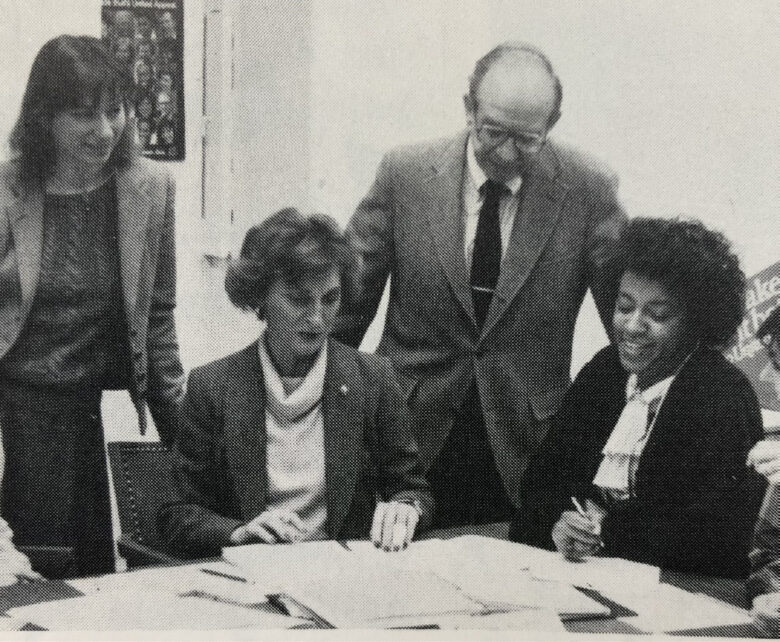
The JLC finds a permanent home, purchasing and renovating the historic Columbia Center building as an office, meeting, and event space.
-
1990Tackling Tough Issues in Changing Times
1990
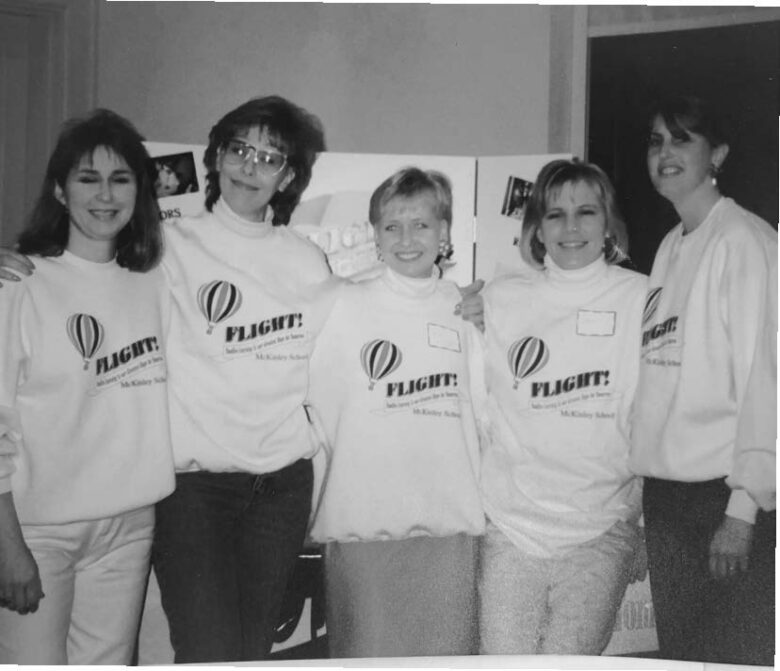
“Families Learning Is Our Greatest Hope for Tomorrow” (FLIGHT) launched as a mentoring and tutoring program for school children to decrease suspension and expulsion rates. The JLC continues volunteer and financial support through the decade.
1991
The JLC partners with Cincinnati Museum Center to launch the Children’s Museum, which now provides 1,800 hours of programming annually and is ranked in the Top 10
Children’s Museums in the U.S.1993
The JLC pilots Family Friends, a parent aide program targeted to teen parents in the East End.
-
2000Entering a New Millennium of Progress
2002
JLC founds MindPeace to answer a significant need for an improved system of mental health care for children in Greater Cincinnati.
2003
JLC establishes CandO (Community & Outreach), a standing committee to provide capacity-building volunteer support to past projects and other nonprofit organizations.
2007
Girls on the Run, a new nonprofit, approaches the JLC for assistance with events that offset the gender gap in confidence young women experience during adolescence.
-
2010Carrying on the Legacy
2010
Our Kids in the Kitchen program tackles childhood obesity and its root causes through workshops, advocacy, and family events.
2013
The JLC founds RefugeeConnect in response to a needs gap in refugee resettlement. After five years of nonprofit incubation with the JLC, RefugeeConnect launched as an
independent nonprofit in 2018.2015
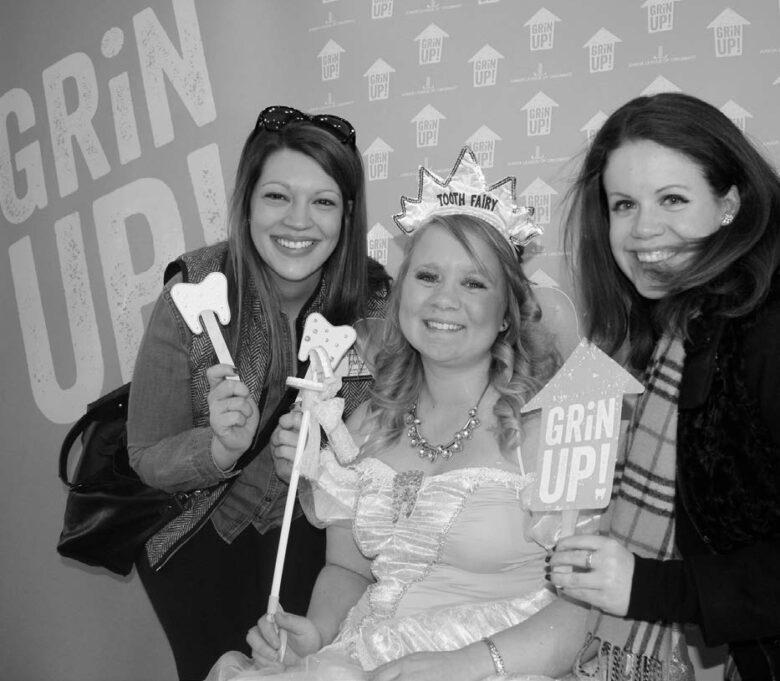
The JLC’s GrinUp! program partners with the Duke Energy Children’s Museum to create Inside the Grin!, an interactive exhibit promoting pediatric oral health.
-
Today and BeyondInvesting in Tomorrow’s Civic Leaders
Community
The JLC maintains a relationship with more than two-dozen past projects and partner organizations, including hundred-year relationships.
Training
The JLC provides hundreds of training hours annually for more than 900 women dedicated to nonprofit service.
Service
JLC women continue the work of our forbearers by volunteering, serving on nonprofit boards, and advocating for women, children, and families.